
Commercial Elevated Concrete Slab Grinding & Levelling
Restricted-access commercial grinding corrected high areas and a weather-affected elevated slab after equipment mobilisation to the working level.
Project Overview
Weather conditions during the original concrete placement and finishing process had affected this elevated commercial slab, leaving rough areas, surface ridges and an inconsistent visible finish. The concrete contractor needed a practical remedial solution that could improve the presentation without creating unnecessary delay for the wider construction programme.
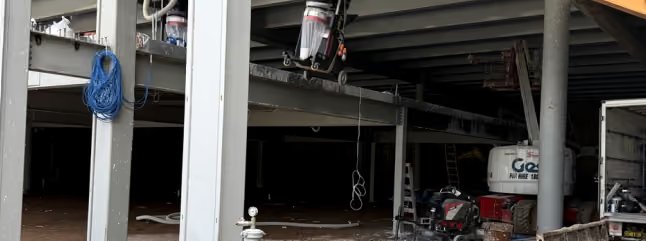
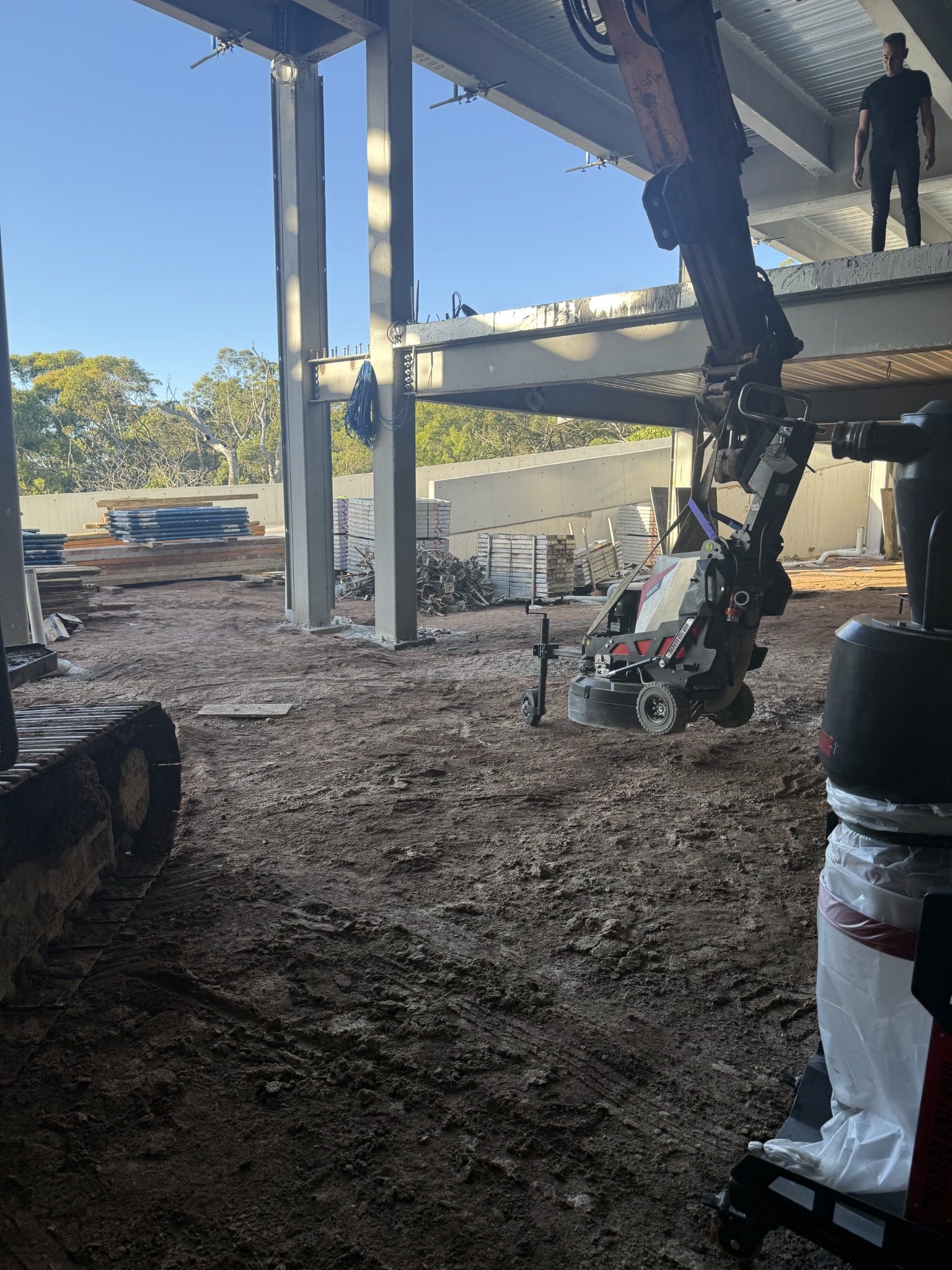
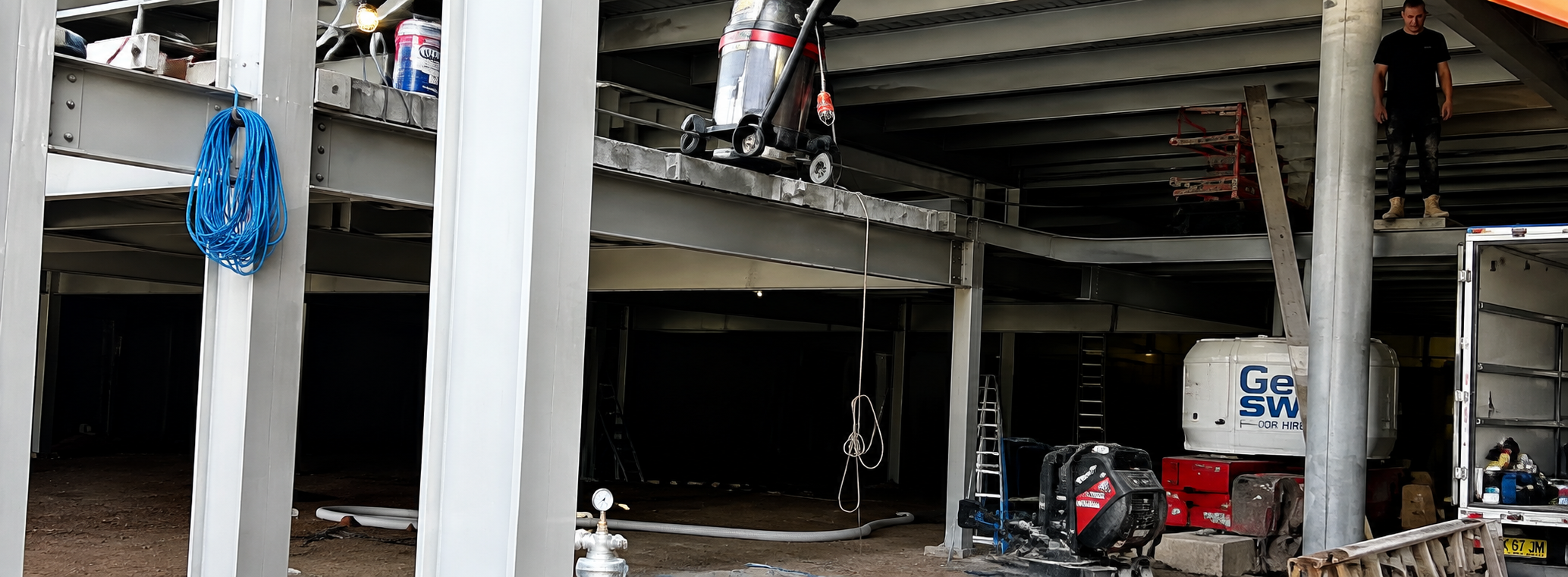
Access was the first challenge. There was no conventional route for moving our commercial grinding equipment onto the working level, so we coordinated with the site team and the machinery was lifted into position using an excavator. We then allocated the full Saturday to controlled remedial grinding and surface correction.
- Scope: Remedial grinding and elevated slab surface correction
- Main challenge: Restricted machinery access and a weather-affected finish
- Access solution: Equipment lifted onto the slab using an excavator
- Schedule: Full Saturday allocated to the corrective work
- Correction: Reduction of high areas, rough sections and visible inconsistencies
- Result: Cleaner, more consistent mechanically ground concrete
A Weather-Affected Concrete Finish
Weather during placement and finishing had left rough ridges, high areas and inconsistent surface marks. The agreed work addressed these visible surface issues through controlled grinding. Structural assessment and repairs were outside this surface-correction scope.
Restricted Access to the Elevated Slab
There was no normal ramp or loading route for bringing the grinding machines onto the elevated level. We worked with the site team to coordinate access, and an excavator was used to lift the equipment into position.
Elevated slab grinding requires planning for equipment access, power, dust extraction, movement across the working area and removal of machinery. The access method must be assessed for the particular site and coordinated with the responsible site team.
Our Remedial Concrete Grinding Process
Initial surface inspection
We reviewed the slab and identified the most visible high areas, rough finishing marks, ridges and inconsistent sections. The purpose was to locate the concrete that genuinely required material removal and avoid unnecessarily grinding areas that were already acceptable.
Site and equipment setup
After the machines were lifted onto the working level, we organised the grinding path, equipment movement, leads and dust-management equipment. This allowed the work to proceed methodically across the elevated area.
Controlled high-spot reduction
We began with gradual passes over the most prominent high areas and rough sections. High-spot removal means grinding raised concrete so it blends more consistently with the surrounding surface. Removing too much material in one location can create a new low section or visible hollow, so the process required measured checks.
Overlapping grinding passes
Consistent overlap between machine paths helped blend the cuts and reduce visible lines between individual runs. The surface was checked during the work so additional material was removed only where required. The aim was controlled surface correction rather than unnecessarily cutting deeply into the slab.
Edges and restricted areas
Large floor grinders cannot reach every perimeter, wall line, column edge or restricted section. Detailed grinding was completed where required so the corrected finish did not stop short of the slab boundaries.
Progressive checks and final inspection
We reviewed the general surface, transitions between passes, edges and isolated areas throughout the work. After grinding was complete, the slab was cleaned and visually inspected to confirm that the visibly poor finish had been substantially improved.
Completed in One Saturday
We allocated the full Saturday to the remedial work. The weekend programme helped reduce conflicts with other trades while we completed the agreed grinding and surface correction.
The Completed Result
The weather-affected surface was improved into a cleaner, more consistent and professionally presented mechanically ground finish. Controlled grinding substantially reduced the prominent high areas, rough sections and inconsistencies that had affected the slab’s appearance.
What Concrete Grinding Can and Cannot Correct
Remedial concrete grinding can reduce isolated high spots, remove rough finishing marks, blend ridges and transitions, correct minor surface inconsistencies, improve presentation and prepare a slab for a later flooring system.
Grinding cannot raise low areas, repair structural cracking, correct reinforcement or slab-thickness issues, replace engineering assessment or automatically achieve a specified floor-flatness tolerance. Low sections may require a suitable repair mortar, screed or levelling compound depending on the project. Structural concerns must be assessed by an appropriately qualified professional.
Why Access Planning Matters
The grinding itself is only one part of restricted elevated work. Equipment selection, the lifting method, power, dust management, working space and coordination with other contractors can all affect the approach. An excavator suited this site’s coordinated plan, but it should not be assumed to be appropriate for every project.
We assess both the concrete condition and the site logistics when planning commercial concrete grinding in Sydney.
Commercial Grinding for Builders and Contractors
Resin Me Epoxy works with builders, concrete contractors, project managers, flooring contractors, shopfitters, warehouse operators and facilities teams. Remedial grinding can be useful where a slab has high areas, rough finishing marks, coating residue or other surface inconsistencies that may interfere with the next stage. Each condition is assessed on its own facts.
Frequently Asked Questions
Can grinding correct a poor slab finish?
It can reduce high areas, ridges, rough marks and minor inconsistencies where the concrete is suitable. It cannot correct every structural or dimensional problem.
Can grinding make an elevated slab perfectly level?
No. Grinding removes raised concrete but cannot lift low sections. A nominated tolerance may require surveying, measurements and additional levelling materials.
How do grinding machines reach an elevated slab?
The method depends on the site and may involve an approved ramp, goods lift, crane, excavator or another coordinated access solution. No single method suits every project.
Can weather-affected concrete be improved by grinding?
Some surface inconsistencies can be improved through controlled grinding where the underlying concrete is sufficiently sound. Severe deterioration or structural concerns require further assessment.
Is commercial grinding dust-free?
No. Professional extraction can significantly control airborne dust, but machine selection, setup, extraction and final cleaning all contribute to dust management.
Does surface levelling mean structural slab levelling?
No. In this context it means reducing high spots and blending irregularities. It does not change the structural position of the slab or raise low areas.
Request a Commercial Grinding Assessment
Need high spots, a weather-affected finish or an inconsistent commercial floor assessed? Send us photographs, area and access information so we can review the practical approach, or view more completed projects.
Have a Floor That Needs This?
Request a commercial floor-preparation assessment for your project scope, access and required handover condition.