
Commercial Food Warehouse Epoxy Flooring & Quartz Slip-Resistant System
Mechanical concrete grinding, targeted slab repairs and a multi-coat epoxy system with fine quartz aggregate transformed the food warehouse floor into a seamless, textured and easier-to-clean commercial surface.
Project Overview
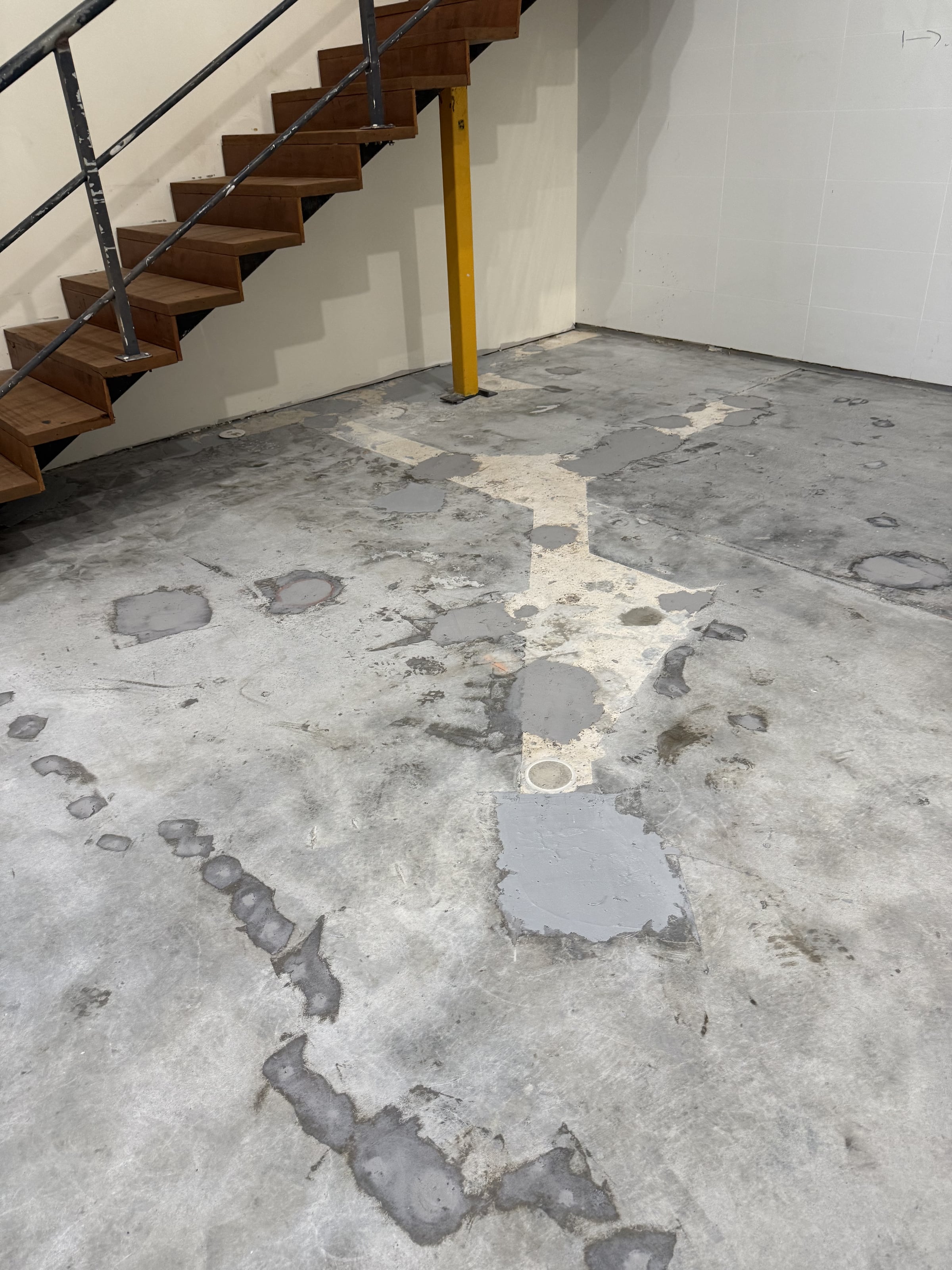
We completed this commercial epoxy flooring project for a food warehouse in Parramatta where the existing concrete required substantial preparation before coating. The 320 m² slab contained holes, cracks, worn areas and general surface imperfections, so our work began with mechanical grinding and targeted repairs rather than simply rolling epoxy over the existing floor.
The objective was to create a hard-wearing, seamless and easier-to-clean commercial surface with controlled quartz texture. The long-term performance of an epoxy floor depends heavily on the concrete beneath it, making warehouse epoxy floor preparation a central part of the project.
Initial Inspection and Site Preparation
We inspected the existing slab to identify visible damage, cracks, holes, edges and surface contamination. The working area and grinding sequence were organised so the concrete could be prepared consistently and surrounding surfaces protected.
Visible and accessible defects were treated within the agreed flooring scope. These were substrate repairs, not structural certification; future slab movement can cause cracking to return.
Mechanical Concrete Grinding
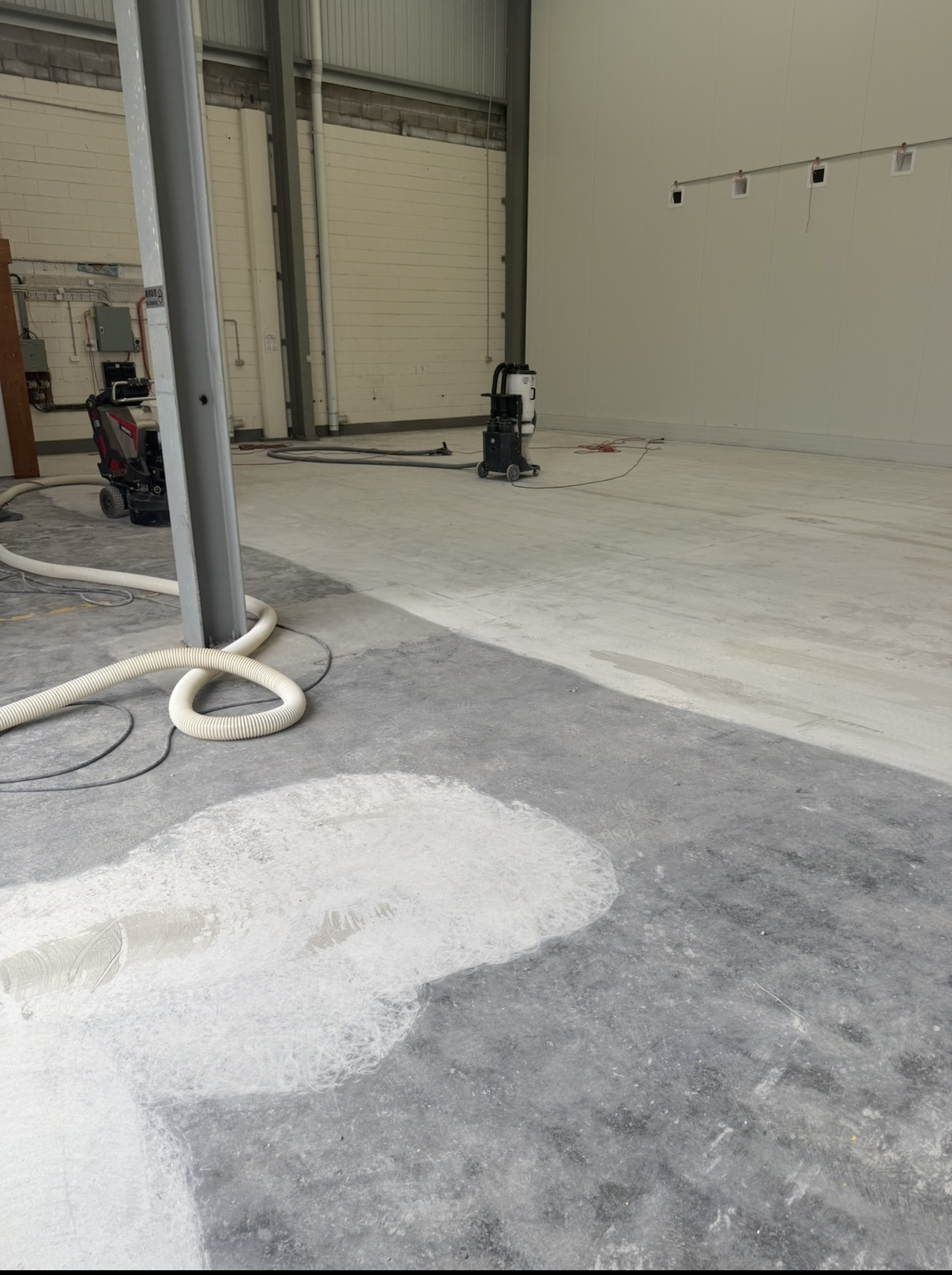
The floor was mechanically prepared with 30-grit double-segment Redi-Lock diamond tooling. This grinding removed weak surface material and contamination, opened the concrete pores, exposed defects that were not fully visible beforehand and produced a mechanical profile for epoxy adhesion.
The main floor and detailed edge areas were included in the preparation. Mechanical concrete grinding for epoxy flooring is more reliable than relying only on acid washing or basic cleaning because a coating must bond to sound, profiled concrete.
Industrial dust extraction was used to control airborne dust during grinding, followed by detailed vacuum cleaning. Extraction and cleaning controlled dust but did not eliminate it entirely.
Hole, Crack and Surface Repairs
Once the slab had been ground and cleaned, we could inspect it more accurately. Accessible holes, cracks and surface defects were cleaned, prepared and repaired using a compatible flooring repair method. Where practical, repaired areas were brought level with the surrounding surface so they would not interfere with the coating system.
Concrete can continue to move. Repairs reduce existing defects and create a better coating substrate, but they cannot guarantee that cracking caused by future movement will never return.
Detailed Cleaning Before Coating
The warehouse concrete was thoroughly vacuumed and inspected before any coating was applied. Dust, loose repair material and grinding residue can interfere with epoxy adhesion or create visible defects, so cleaning was treated as a separate quality-control stage rather than an afterthought.
First 100% Solids Epoxy Primer/Base Coat
We applied a 100% solids epoxy primer/base coat over the mechanically prepared slab. This first layer bonded with the profiled concrete, helped seal the porous surface, established the foundation of the system and created a consistent base for the following coats.
Second Epoxy Coat with Fine Quartz
A second epoxy primer or build coat was applied, and fine quartz aggregate was introduced evenly while the layer was wet. The quartz was not used only for appearance; its main purpose was to create controlled surface texture and improve everyday traction in the commercial environment.
Quartz distribution needed to be managed carefully. Too little may provide limited texture, while an uncontrolled heavy broadcast can produce an unnecessarily aggressive surface that is more difficult to clean.
Removing Excess Quartz and Inspecting the Floor
After the quartz-enhanced layer had cured sufficiently, loose or excess aggregate was removed and the floor vacuumed again. We checked the repairs, edges and quartz distribution before the final coat. This helped identify loose material, rough accumulations or inconsistent sections that could affect the completed surface.
Final Epoxy Topcoat
The final epoxy topcoat was applied over the prepared quartz layer. It locked the aggregate into the system, protected the underlying epoxy layers and produced a more consistent finished appearance. It also made the textured surface more practical for routine cleaning and provided an additional wearing layer for normal warehouse use.
The floor requires care appropriate to its traffic and cleaning regime. Chemical exposure, impacts and wear must be considered when specifying and maintaining an epoxy system.
Completed Result
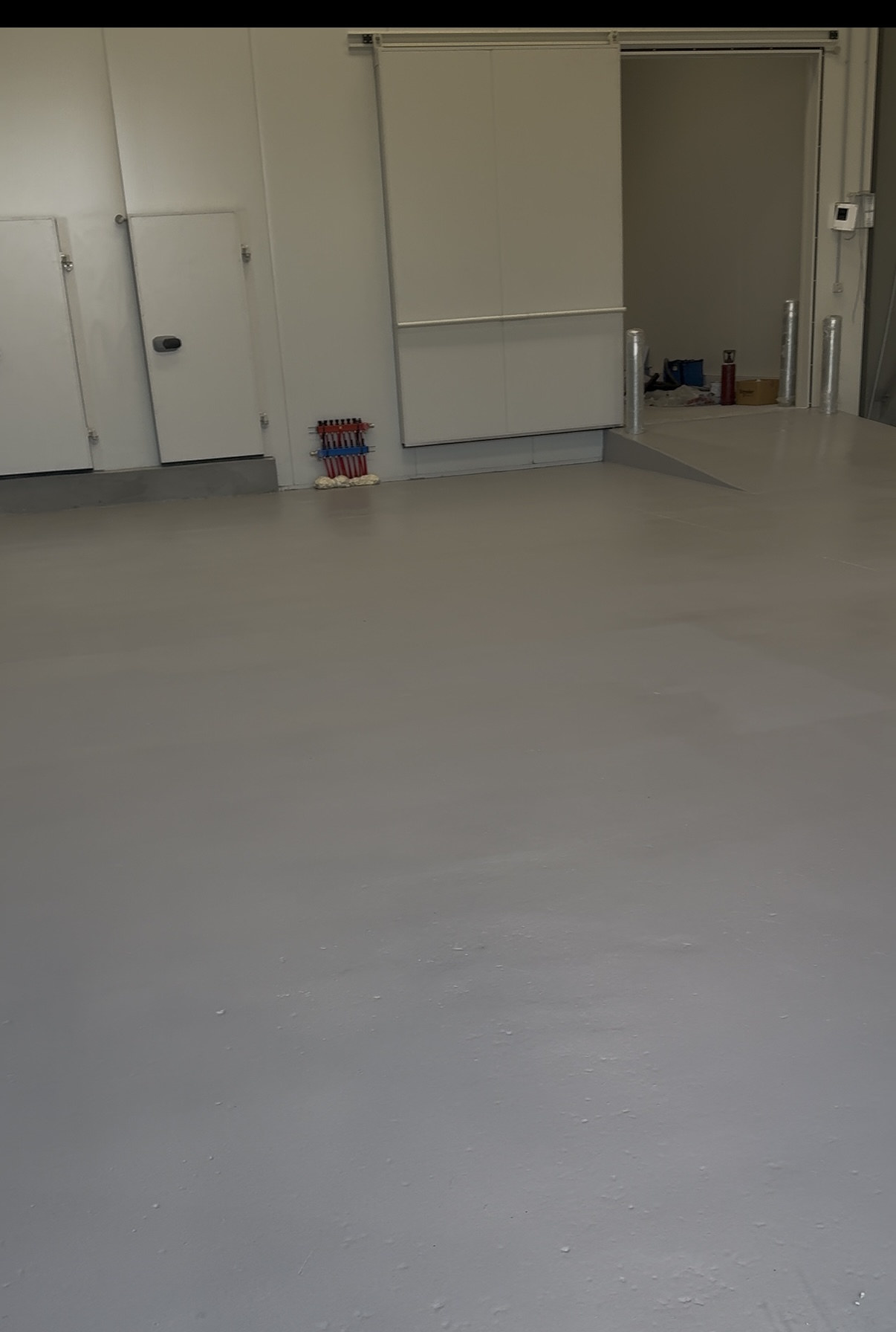
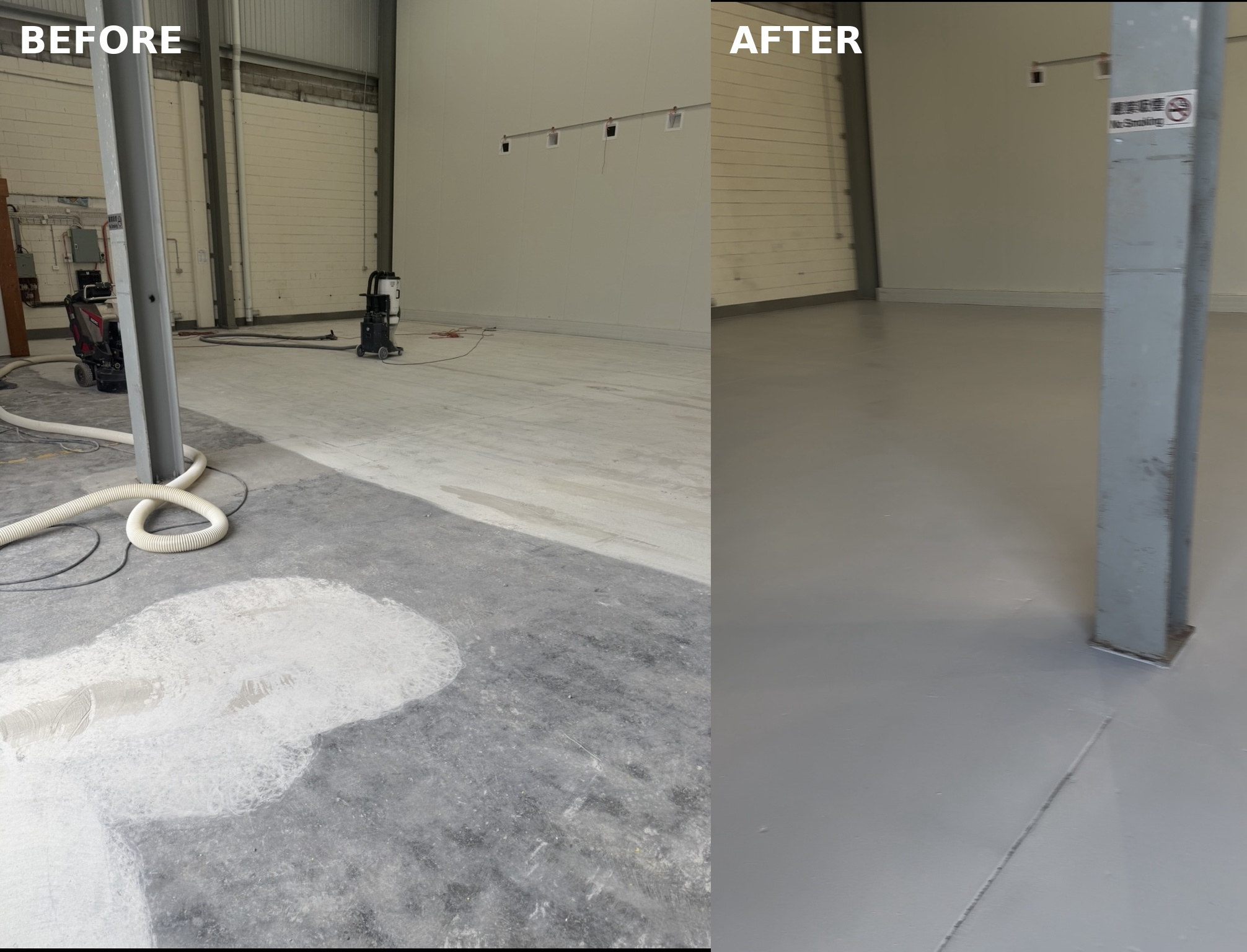
The completed floor gave the customer a cleaner, more consistent and professional commercial surface. The fine quartz created useful texture, while the final coat locked the system together and made the floor more practical for everyday warehouse cleaning.
Most importantly, the system was installed over mechanically prepared and repaired concrete rather than relying on a coating to hide the slab’s original condition. The customer was pleased with the completed result and the improvement over the original damaged slab.
Why This System Suits a Food Warehouse
Quartz-textured epoxy flooring can be suitable for food warehouses, storage areas, cool-room access zones, packing areas and similar commercial interiors. It provides a seamless surface with fewer open joints than many tiled systems, useful everyday texture, easier routine cleaning than untreated porous concrete and a maintainable finish that can be inspected and recoated when required.
The floor is not represented as certified for direct food contact, HACCP approved, antibacterial, waterproof or assigned a formal slip-resistance rating. Actual traction is affected by surface contamination, footwear, cleaning, traffic and maintenance.
Cleaning and Maintenance
- Remove grit and abrasive debris regularly.
- Clean spills promptly.
- Use a neutral or manufacturer-approved floor cleaner.
- Avoid unnecessarily aggressive cleaning chemicals.
- Inspect high-traffic zones for visible wear.
- Repair local damage before moisture or contamination reaches the concrete.
- Consider a maintenance recoat when the top surface becomes visibly worn.
Actual service life depends on traffic, forklifts or pallet equipment, cleaning practices, impacts, contamination, substrate movement and ongoing maintenance. Ongoing maintenance is required, and future slab movement may cause cracking.
Frequently Asked Questions
Why is concrete grinding important before epoxy?
Grinding removes weak surface material and contamination while opening the concrete pores and creating a mechanical profile for adhesion.
What does the fine quartz do?
Quartz adds controlled texture to the wet epoxy layer and improves everyday traction. Its distribution must balance texture with practical cleaning.
Is the warehouse floor non-slip?
No floor is completely slip-proof. We describe the surface as textured and slip-resistant, with traction influenced by contamination, cleaning, footwear and traffic.
Can repaired cracks reappear?
Yes. Repairs improve the current substrate, but concrete can continue to move and future movement may cause cracking to return.
Commercial Epoxy Flooring Across Sydney
Resin Me Epoxy provides commercial concrete grinding, warehouse floor preparation, concrete repairs and commercial epoxy flooring across Sydney. Contact us to arrange a site inspection or view our completed projects.
Project Gallery
Have a Floor That Needs This?
Request a commercial floor-preparation assessment for your project scope, access and required handover condition.