
Private Gym Floor Preparation and Sticky Glue Removal – 100 m²
Private gym • approximately 100 m² • sticky adhesive removal and mechanical concrete preparation
Project Overview
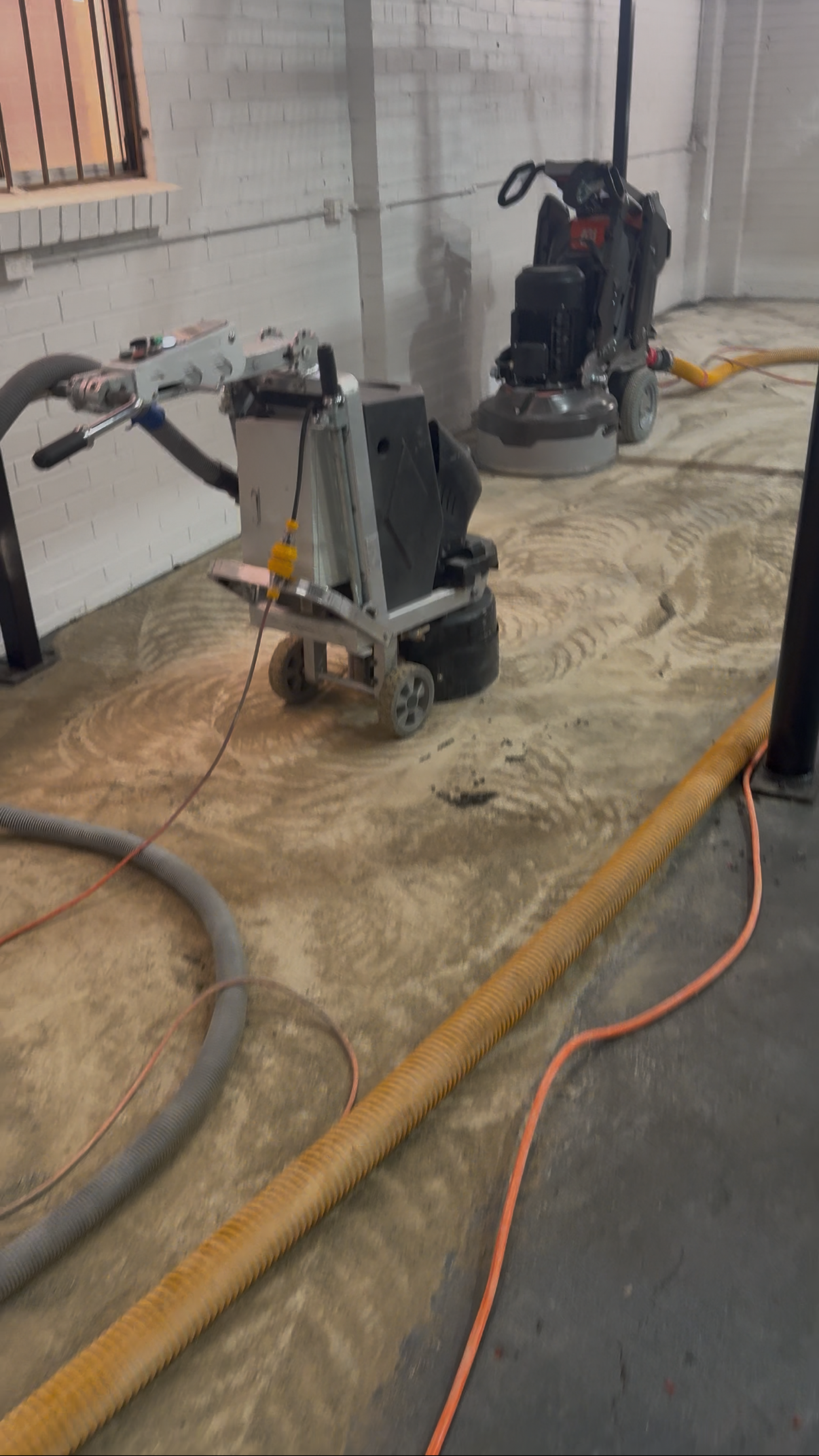
We were engaged to prepare approximately 100 m² of concrete flooring inside a private gym. The slab was covered with a heavy layer of very sticky flooring adhesive that had to be mechanically removed before the next stage of the flooring installation could proceed.
This was not a straightforward light grind. The adhesive was tacky, difficult to remove and prone to smearing when approached with unsuitable tooling. We selected the removal method around the material on the floor, then used controlled machine passes to cut and lift the contamination from the concrete. The complete 100 m² preparation was completed in approximately half a working day, helping reduce disruption to the gym without treating speed as a substitute for the required preparation standard.
Project facts
- Project: Private gym floor preparation
- Area: Approximately 100 m²
- Existing condition: Heavy, sticky flooring adhesive on the concrete slab
- Service: Adhesive removal and mechanical concrete preparation
- Primary tooling: PCD tooling
- Time on this floor: Approximately half a working day
- Purpose: Prepare the substrate for assessment and the next flooring installation stage
The floor preparation challenge
Sticky flooring glue behaves differently from a dry, brittle residue. As soft or tacky adhesive warms under ordinary grinding tools, it can smear across the concrete and clog the tooling instead of being removed effectively. Continuing with the wrong setup can slow production and leave adhesive contamination across the slab.
The material on this gym floor was more difficult than a normal light glue residue. Its condition called for a more aggressive mechanical removal method capable of cutting into the heavy adhesive and lifting it away from the concrete. We also had to monitor how the glue responded during each pass because pace, direction and overlap can affect the result.
Why we used polycrystalline diamond tooling
Polycrystalline diamond tooling, usually shortened to PCD tooling, is designed to scrape, cut and lift certain difficult surface materials rather than relying only on abrasive grinding. It is commonly considered for thick flooring adhesive, sticky glue, soft coatings, paint build-up, certain membranes and other heavy surface contaminants.
PCD segments work differently from standard grinding diamonds. Their cutting action can be more effective where tacky material would otherwise heat up and smear. On this project, the adhesive was too sticky and difficult for an ordinary light grinding process, so PCD tooling was the appropriate starting choice.
PCD tooling is not automatically suitable for every slab or every flooring specification. We select tooling according to the material being removed, the concrete beneath it and the surface profile required for the next system. The correct choice at the beginning helps avoid repeatedly spreading difficult glue across the working area.
Our eight-step preparation process
1. Initial floor inspection
We inspected the existing concrete and assessed the amount, condition and behaviour of the adhesive. The glue was extremely tacky and required specialist removal tooling rather than a basic surface grind. This assessment guided the tooling choice and the sequence for the 100 m² area.
2. Work-area setup
We organised the work zone so the grinder could move consistently across the gym floor. The setup allowed controlled movement through the area, maintained safe access and accounted for surrounding surfaces without introducing unnecessary delays.
3. Selection of PCD tooling
We selected PCD tooling to break through, cut and lift the heavy adhesive contamination. Choosing the correct tooling from the outset reduced the risk of repeatedly heating and smearing the glue with a setup that was not suited to its condition.
4. Mechanical adhesive removal
We completed controlled passes across the floor, allowing the PCD segments to progressively cut and lift the adhesive. We monitored machine pace, travel direction and overlap. Moving too quickly can leave contamination behind, while excess heat or unsuitable tooling can make sticky material smear.
5. Additional passes where required
Sections with heavier adhesive build-up received further attention. The aim was to respond to the condition of each area rather than assume one pass would produce the same result everywhere. We did not treat the work as a decorative finishing grind; the objective was targeted adhesive removal and substrate preparation.
6. Edge and perimeter checks
We checked perimeter areas, transitions and sections close to walls because a main floor grinder cannot always reach every tight location in the same way as the open floor. These areas were assessed as part of the overall preparation standard without claiming a process that was not recorded for this project.
7. Cleaning and inspection
After the mechanical passes, we cleaned and inspected the floor for remaining adhesive build-up and inconsistent areas. This check allowed us to assess the exposed substrate and confirm that the preparation matched the handover requirement for the next stage.
8. Handover for the next flooring stage
We left the concrete in a more consistent condition for the next flooring contractor or installation stage. The final requirements always depend on the product that will follow. Additional grinding, repairs, moisture assessment, cleaning, priming or profiling may still be required under that system's specification.
The project result
We mechanically removed the difficult adhesive from approximately 100 m² of private gym flooring in about half a working day. The result showed the production benefit of combining an experienced operator, suitable machinery and the correct PCD tooling for the material encountered.
The objective was not simply to work quickly. It was to remove the problematic sticky contamination efficiently while leaving the substrate in a condition that could be assessed for the next flooring stage. This was a floor preparation project, not a polished, coated or completed decorative flooring installation.
For similar projects, our concrete grinding and floor preparation service is planned around the existing surface and the specification that follows.
Why flooring adhesive removal matters
Old glue is not always a suitable foundation for a new floor. Unstable residual adhesive may affect bond strength, primer penetration, new flooring adhesive performance, coating adhesion, surface consistency and the appearance of the next finish.
Mechanical concrete adhesive removal helps expose the underlying slab so its condition can be assessed and the substrate can be prepared to suit the specified system. It does not create an unconditional guarantee of future adhesion: performance also depends on the next product, installation method, slab condition and site environment.
Where this preparation service is used
The same type of sticky glue removal and mechanical floor preparation may be required in private and commercial gyms, fitness studios, offices, retail tenancies, schools, medical facilities, warehouses, showrooms, end-of-lease projects and commercial renovations.
Although this project involved a 100 m² private gym rather than a large commercial facility, smaller time-sensitive floors can contain equally difficult materials. They require the same care in tooling selection, controlled removal and handover planning as larger commercial floor preparation work across Sydney. More examples are available in our completed projects.
Project-specific timeframe
This 100 m² project was completed in approximately half a working day. That timeframe was specific to the conditions, access, adhesive and preparation requirements encountered on this floor. Other adhesive-removal projects may take longer where there are thicker materials, multiple adhesive layers, difficult access, more edge work, slab damage or a more detailed final surface specification.
Frequently asked questions
How do you remove very sticky flooring adhesive from concrete?
The method depends on the adhesive and slab condition. On this private gym project, the glue was too tacky for a basic light grind, so we used PCD tooling to mechanically cut and lift the adhesive from the concrete.
Why are PCD tools used for glue removal?
PCD tools are designed to aggressively scrape and lift difficult materials such as thick adhesive, soft coatings and certain membranes. They can be more effective than standard grinding diamonds where sticky material would otherwise heat up and smear.
How long does it take to remove glue from a 100 m² floor?
This private gym was completed in approximately half a working day. Timeframes vary according to adhesive thickness and condition, concrete hardness, access, edge work, floor condition and the preparation standard required for the next flooring system.
Is the floor ready for a new coating immediately after glue removal?
Not automatically. The preparation requirement depends on the new flooring product and its manufacturer's specification. Further grinding, repairs, moisture assessment, cleaning or priming may be required before installation.
Need sticky glue removed?
Need old flooring adhesive removed from a gym, office, shop, warehouse or commercial concrete slab? We provide mechanical adhesive removal, concrete grinding and floor preparation across Sydney. To help us assess the work accurately, send the approximate floor area, access information, photographs of the existing surface and details of the flooring system planned next. Contact Resin Me Epoxy for an assessment and quote.
Have a Floor That Needs This?
Request a commercial floor-preparation assessment for your project scope, access and required handover condition.