
School Floor Glue Removal & Concrete Grinding – Windsor NSW
Restricted-access school floor glue removal and concrete grinding in Windsor using a 160 kg Tornado grinder, PCD tooling and 30-grit diamonds.
Project Overview
Project Overview
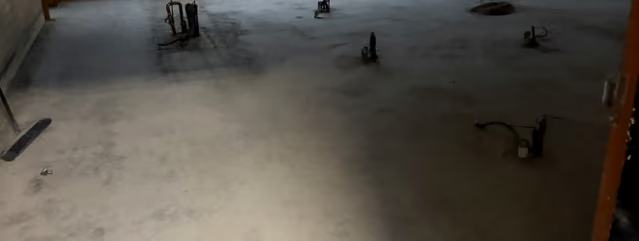
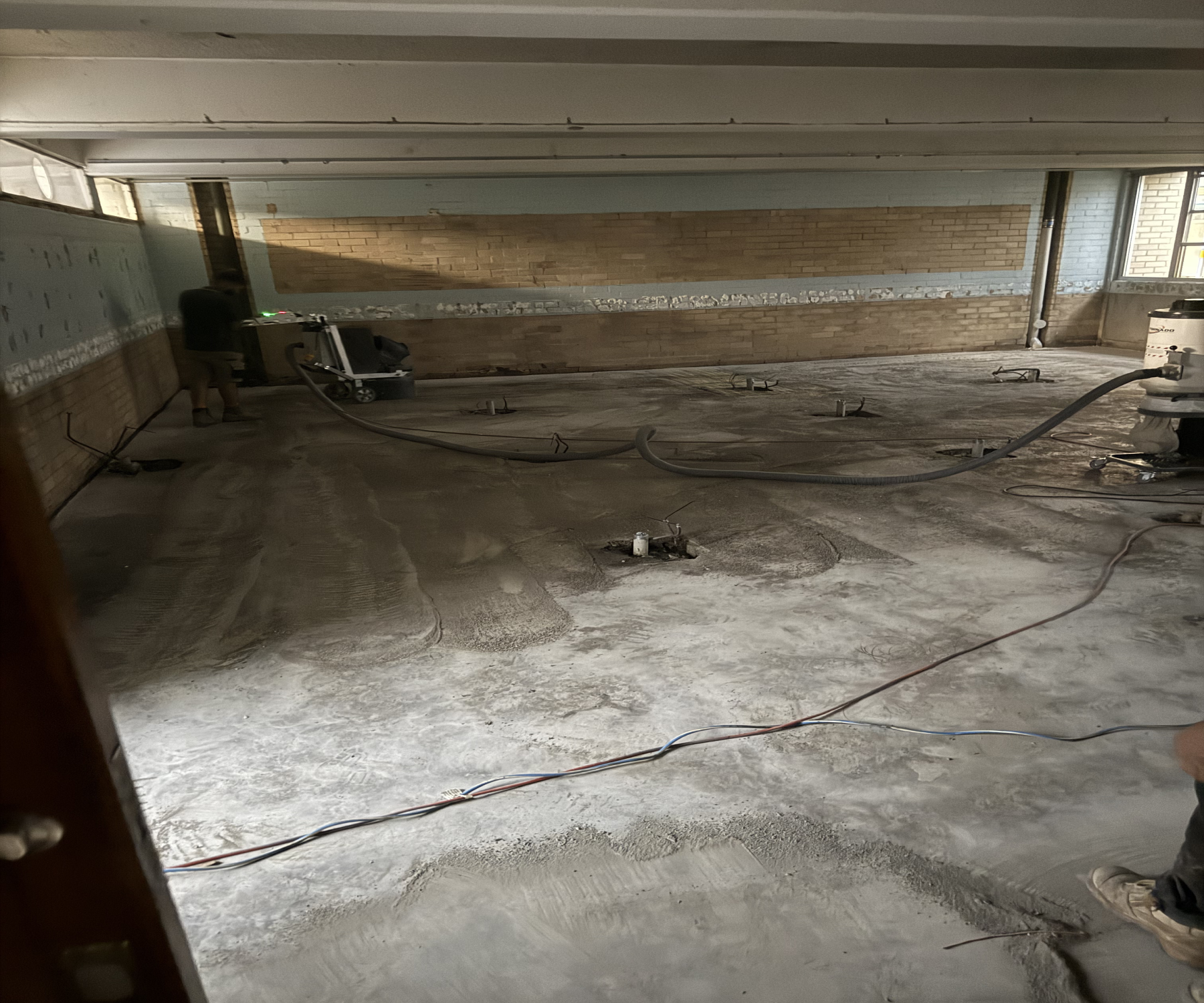
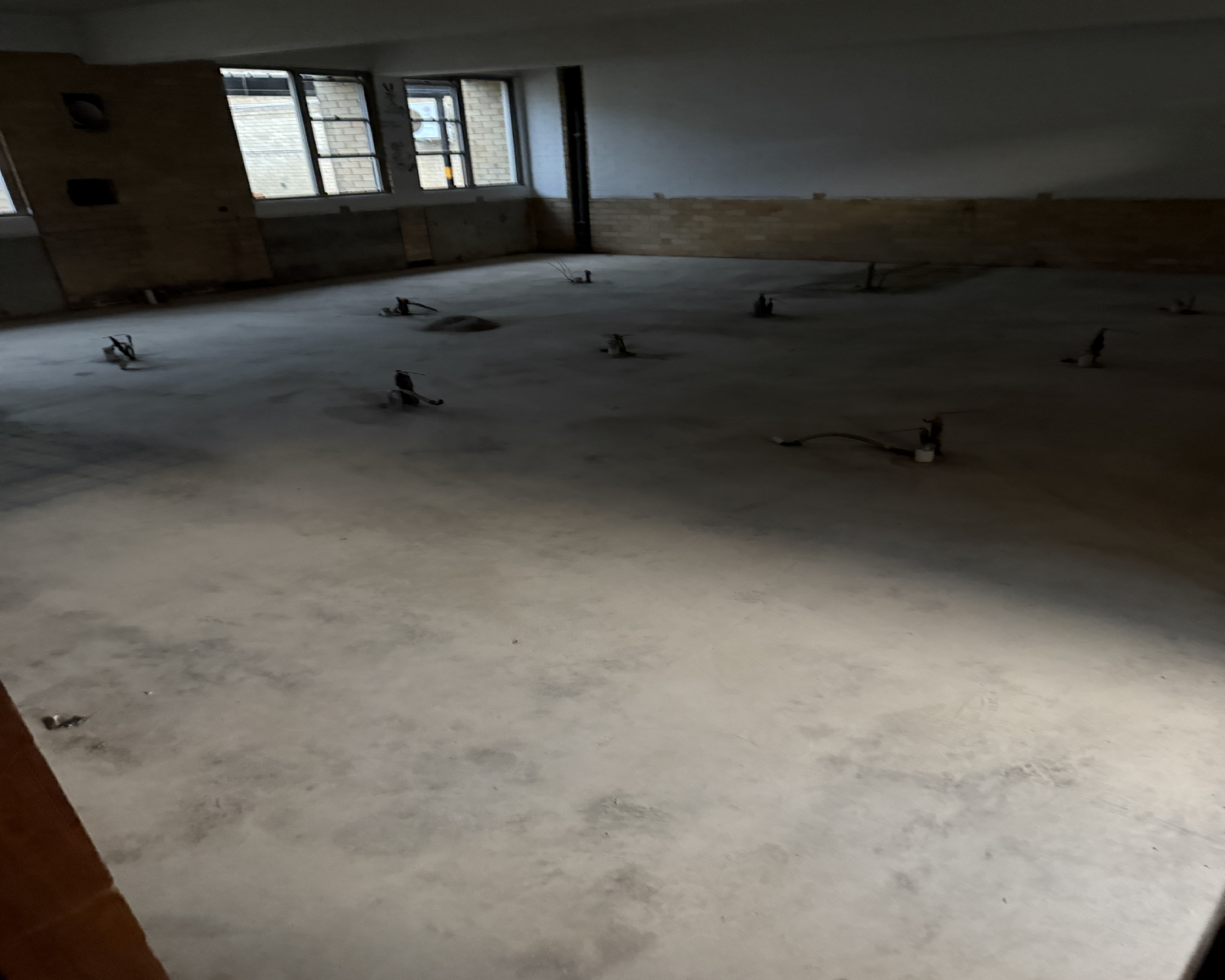
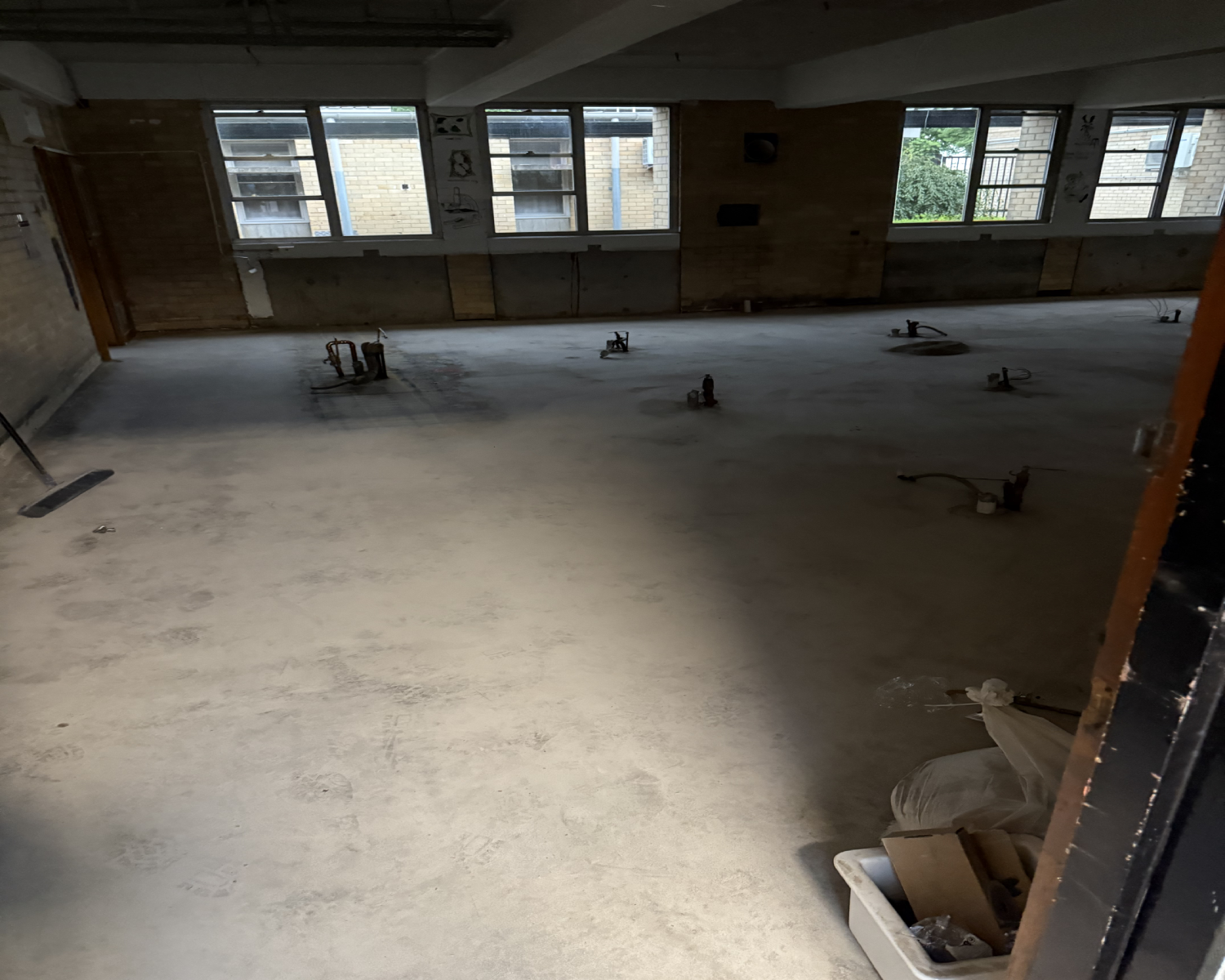
We were engaged to remove long-standing flooring adhesive and mechanically prepare approximately 129 m² of concrete at a school in Windsor, NSW. The challenge was not only the condition of the old glue. The access route into the work area meant our larger remote-control commercial grinders could not be brought onto the floor safely or practically.
We selected our 160 kg Tornado concrete grinder for the Windsor school project. It is a compact commercial grinder that suited the available access while still providing the machine weight, stability and controlled cutting action required for difficult adhesive removal. This allowed us to complete the work with professional floor-preparation equipment rather than relying on an unsuitable lightweight machine.
- Area: Approximately 129 m²
- Service: Concrete grinding and floor glue removal
- Equipment: 160 kg Tornado grinder with industrial dust extraction
- Tooling: PCD adhesive-removal tooling followed by 30-grit Redi-Lock diamonds
- Result: Mechanically prepared concrete ready for the next flooring stage
The Floor-Preparation Challenge
Aged floor glue does not behave consistently across an entire slab. Some areas can soften and smear as heat builds during grinding, while other sections remain hard and strongly bonded to the concrete. Thickness can also change from one part of the room to another. If ordinary diamond tooling is introduced too early, the segments may clog or move the adhesive around instead of cutting it away.
Access restrictions were equally important. Floor area alone does not determine the correct grinder. We assessed the doorways and access path, the condition of the adhesive, the concrete beneath it, the removal requirement and the surface profile needed for the following flooring works.
Why We Used the 160 kg Tornado Grinder
Our larger grinders are highly productive in warehouses and open commercial areas, but they were not appropriate for the access route on this project. The Tornado could be moved into the work area while maintaining controlled grinding pressure and supporting specialist adhesive-removal tooling.
Good commercial floor preparation is not always about using the largest machine available. The correct machine is the one that suits the site access, substrate, material being removed and required outcome. Keeping commercial grinders in different sizes allows us to plan for schools, corridors, upper levels and other restricted-access environments without treating the work as a domestic or light-duty task.
Our Glue-Removal and Grinding Process
Initial inspection and setup
We inspected the existing concrete, the varying condition of the old adhesive and the available equipment route. The Tornado grinder was connected to compatible industrial dust extraction. This provided dust-controlled grinding and helped collect removed material, although no mechanical grinding process should be described as completely dust-free.
PCD adhesive removal
We began with PCD tooling to cut through and break down the heavier sections of floor glue. PCD tooling is suited to aggressive removal of adhesives, coatings and similar surface materials. We worked through the floor in controlled sections and used overlapping passes to reduce missed strips. The working speed and number of passes were adjusted according to how the adhesive reacted; one pass was not expected to remove every bonded section.
Cleaning and surface checks
Loose adhesive and grinding waste were removed between stages so we could see the concrete clearly and identify remaining residue. These checks were important because thicker areas and strongly bonded patches needed additional attention rather than an unnecessarily aggressive cut across the entire slab.
Follow-up 30-grit diamond grinding
After the bulk glue had been removed, we changed to 30-grit Redi-Lock diamond tooling. This second stage removed remaining residue, reduced marks from the aggressive PCD stage, exposed clean concrete and created a more consistent mechanical profile. The floor was prepared for subsequent flooring works; it was not decoratively polished or claimed to be perfectly smooth.
Final inspection
We checked the prepared areas for visible glue residue, inconsistent grinding and sections requiring another controlled pass. The result was a clean, mechanically prepared substrate ready for the next flooring system. The type of flooring installed afterwards was outside the confirmed information for this case study.
Project Result
The long-standing adhesive was removed using a planned combination of PCD tooling and follow-up 30-grit diamond grinding. The 160 kg Tornado allowed us to complete the restricted-access work even though our larger grinders could not be brought into the area. The project demonstrates practical machine selection, specialist old floor adhesive removal and commercial school floor preparation for subsequent flooring trades.
Why Machine Selection Matters
A large remote-control grinder can be ideal for an open warehouse, but a compact commercial grinder may be more effective where doorways, corridors, stairs, lifts or level changes restrict access. Before recommending a method, we consider the access route, machine weight, power availability, dust-extraction requirements, concrete condition, adhesive thickness and required surface profile.
Old adhesive also needs to be considered in the context of site requirements and potential hazardous materials. Mechanical removal should only proceed after the relevant project information, testing requirements and controls have been reviewed.
Suitable Applications
This type of restricted-access concrete preparation may be required in schools, offices, retail tenancies, medical or community facilities, corridors, refurbishment projects and areas where carpet or vinyl has been removed. Our concrete grinding services are planned around the actual access and floor condition rather than a one-size-fits-all process.
Frequently Asked Questions
Why was a smaller commercial grinder used?
The access route was not suitable for our larger commercial grinders. The 160 kg Tornado could be moved into the area while still supporting PCD and diamond tooling for commercial floor preparation.
How do you remove old floor glue from concrete?
The method depends on the adhesive type, thickness and condition. Here we used PCD tooling for bulk removal, then 30-grit diamond tooling to remove residue and mechanically prepare the concrete.
Why not use diamond tooling for the entire process?
Heavy adhesive can clog or smear around conventional diamond segments. PCD tooling is generally more effective for aggressive bulk removal, with diamonds used to refine the concrete afterwards.
Was the floor polished?
No. This was a preparation project. The concrete was mechanically ground to remove adhesive and create a suitable substrate for the next flooring stage.
Commercial Floor Preparation in Sydney
Resin Me Epoxy provides concrete grinding, floor glue removal and restricted-access preparation throughout Sydney. Builders, flooring contractors, schools and facility managers can request a site inspection or quote, or view more completed flooring projects.
Have a Floor That Needs This?
Request a commercial floor-preparation assessment for your project scope, access and required handover condition.